
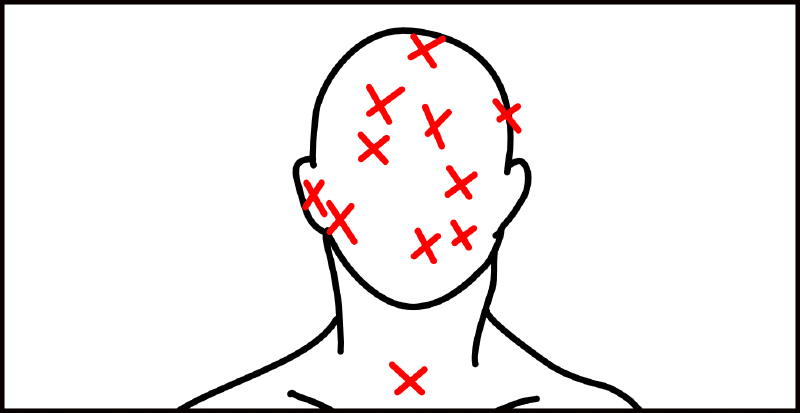
Muscle tension can cause an insane amount of symptoms in the head and neck region:
Blurred Vision
Dizziness
Migraine Headaches
Nausea
Visual Disturbances
Over-tense muscles can be caused by muscular imbalances, poor posture, or even suddenly-increased activity. Or, by things you put in your body like nicotine, alcohol, caffeine, certain medications, or sugar.
To add to the list: emotional distress, nutritional deficiencies, coughing, allergic reactions, chemical withdrawal, and physical trauma.
Muscle tension in the jaw, upper back, and neck muscles are the most common causes for the symptoms above. Pain in one area is often caused by a tight muscle in a different area.
Upper back and shoulder tension causes neck pain, then your neck muscles cause headaches.
Obviously, pain, headaches, and vertigo can have other causes besides tight muscles. But up to 80-90% of our physical pain is caused by Myofascial dysfunction. So it’s worth starting here first.
The fix: self massage #
Doing self massage is great because you can do it daily and for free. You can also use tools like Therapy Balls, lacrosse balls, or a Theracane to save your hands.
Find a sore or tense muscle, then do 10 slow strokes per spot. Work bad areas multiple times per day. Aim for a 5/10 on the “Good pain” scale.
If you suddenly find yourself holding your breath, then you are pressing too hard. Breath holding signals the brain that you are in trouble and can make your muscles tense up even more.
Avoid anything that feels weird or gives you “bad pain”. And as always, consult with your doctor before you do any of this. When in doubt, go see a professional.
Jill Miller has a lot of good videos on techniques you can use to massage different muscle groups. Each muscle listed below has the muscle highlighted in red. That is the area you are aiming to massage.
Tight muscles and their symptoms #
Scalenes #
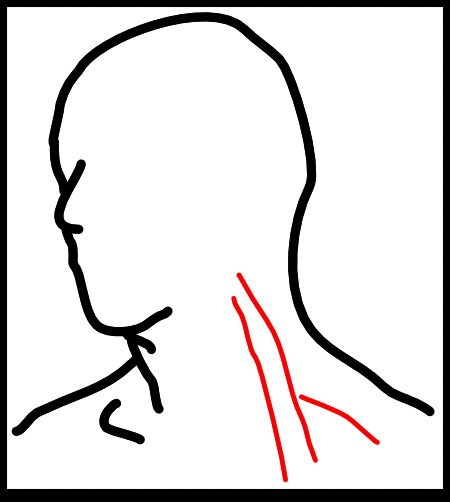
Symptoms of tight scalene muscles
Numbness
Tingling
Weird sensations in chest, shoulder, arm, neck, and hand
Tight scalenes can pull the first rib up into the collar bone and squeeze blood vessels and nerves. Restricted bloodflow and nerve disturbance can cause pain, burning, numbness, and tingling all the way down the arm and hands (thoracic outlet syndrome).
It’s worth starting here because scalenes can cause so many other muscles to also be tense.
Common causes for tight scalene muscles
Poor breathing mechanics (breathing too much with accessory breathing muscles instead of diaphragm)
Hyperventilating
Heavy coughing or sneezing
Emotional tension
Working long hours with hands out in front of you
Stress from caffeine, alcohol, or nicotine use
What you should do Work on your posture, such as keeping your head center, not slouching, etc. And practice diaphragm breathing with deadbugs. Meditation, therapy, or journaling may help with emotional distress. Quit using caffeine, alcohol, nicotine, etc.
Massage the muscles in the front and side of the neck, being careful to avoid pulses and anything that feels weird. Do this throughout the day to relax these muscles.
Sternocleidomastoid #
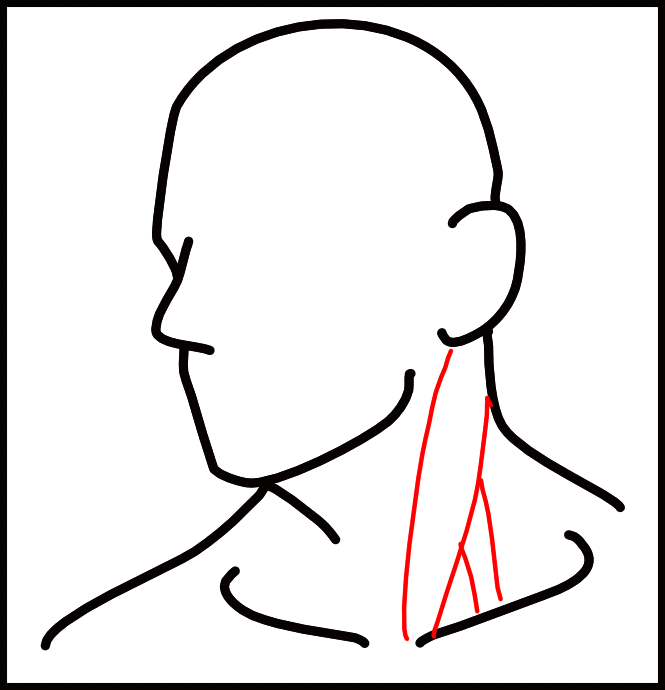
Symptoms of tight sternocleidomastoid muscles
Vertigo
Blurred vision
Dizziness
Migraines
Nausea
Visual disturbances
Tension here can cause dizziness that can occur suddenly or last for minutes, hours, or days. And often given a diagnosis of vertigo.
Sternocleidomastoid muscles help with spatial orientation that helps your brain keep track of the position of your head. Confusing signals are sent to the brain when there is tension here.
This can also cause a referred spasm in the muscle that surrounds the eye. Leading to blurry vision.
Common causes for tight sternocleidomastoid muscles
Bad head posture
Other trigger points or muscle imbalance
Whiplash
Using breath accessory muscles instead of diaphragm.
What you should do Pinch and rub the big muscle you feel on the front of your neck when you turn your head. And work on your breathing and posture.
Trapezius #
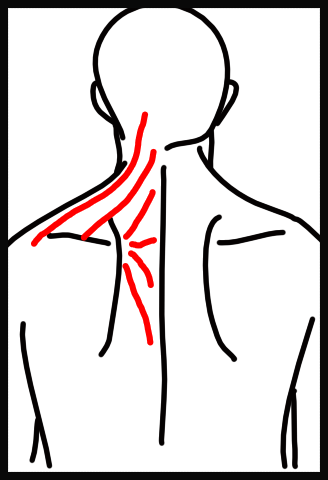
Symptoms of tight trapezius muscles
Migraines
Sore neck
Common causes for tight trapezius muscles
Slouched posture while seated
Forward head
Tight pecks
Tight abs
Working long hours with hands out in front of you
Emotional tension that keeps your shoulders up
What you should do Purposefully let your shoulders drop down multiple times during the day. This area is good to massage with a lacrosse ball up against a wall.
Splenius cervicis #
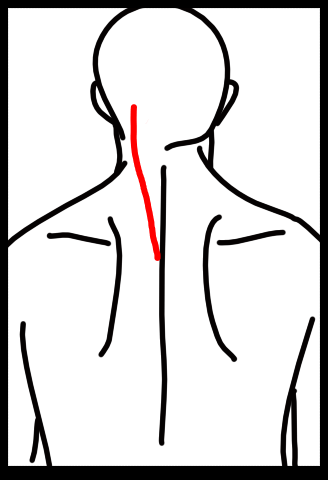
Symptoms of tight splenius cervicis muscles
Blurred vision
Migraines
Visual disturbances
This muscle bends, flexes, and twists the neck.
Common causes for tight splenius cervicis muscles
Lounging with head propped at an angle
Pulling excessive weight
Cold exposure with relaxed breathing
Forward-head posture
Whiplash
What you should do
Fix underlying posture issues and learn to relax. Another lacrosse-ball-to-wall spot.
Suboccipital #

Symptoms of tight suboccipital muscles
Blurred vision
Migraines
Visual disturbances
Common causes for tight suboccipital muscles
Whiplash
Forward-head posture
Emotional tension
Postural stresses
Worry
What you should do
Work on your posture and try to learn healthy ways to cope with stress. Use your fingers to rub this area throughout the day.
Temporalis #
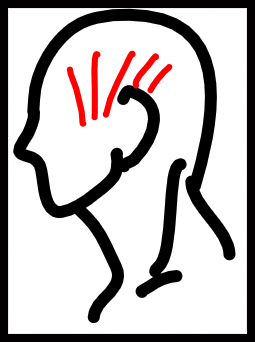
Symptoms of tight temporalis muscles
Migraines
Common causes for tight temporalis muscles
Trauma
Teeth grinding from caffeine use
Forward head posture
What you should do
You can massage this area throughout the day with your fingers.
Sources: